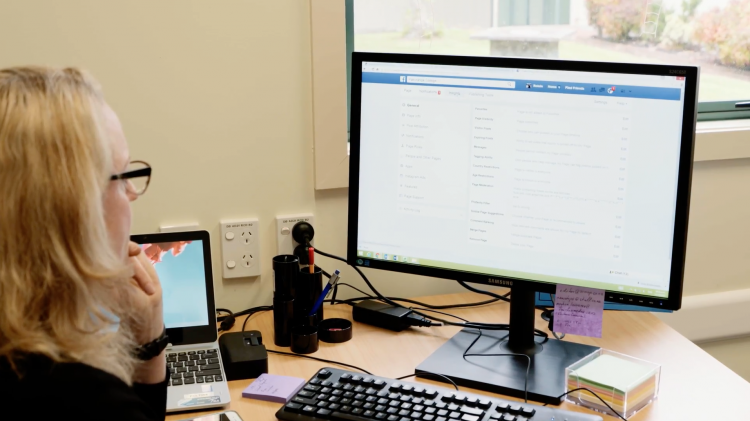
A picture from the school website is automatically uploaded on the classroom Facebook page.
What is social media and social networking?
Social media facilitate the development of online social networks
Social media – are interactive web-based applications that facilitate the creation or sharing of user-generated data, ideas, and other forms of expression via virtual networks. Users can create, share, and appoint with content, including text posts or comments, digital images, and videos.
Social networking – is well-nigh date; using social media to connect and communicate with your online audience with an aim of edifice a network.

Why employ social media and networks?
Some schools use social media platforms like Facebook and Twitter to spread the discussion about schoolhouse news and upcoming events. Others host blogs, videos, or livestream to share information nearly particular classes or school projects. Interaction through comments and feedback builds a dialogue and deepens the connection between students, your school, and your customs.
Social media and social networks tin help y'all:
- straight your parents and customs back to more information on your website
- respond quickly to incidents and manage risks
- weave the school messages through online spaces that your community uses in means that are relevant to them
- grow your understanding of how people use online tools to assist you lot manage inappropriate communications or privacy settings.
Connecting learning and the customs
Teacher, Nikki Fielder describes how Apiti School has set upwardly their school website with links to student wikis and blogs. Students reflect on the benefits to their learning this provides, and share how having a YouTube aqueduct supports learning and sharing.
Place your purpose
Decide your goals
Set up bated time for your leadership team to:
- acquire almost different tools and how they are used
- observe how other school leaders are using social media
- discuss and concur your purpose for using social media
- consider ways to manage, feedback, and engage over the long term; for instance, through an online safe or digital citizenship committee.
- SeeDigital technology: Safe and responsible use in school – Agile and ongoing gamble management approaches (p. 16).
Connect your rationale for using social media with your school vision and values
This may include:
- improving educatee learning experience and fostering digital fluency as part of the curriculum
- edifice customs date
- learning about expectations, patterns, and tools in utilise across your customs
- managing requirements related to NAG 5 and other statutory requirements regarding safe learning environments.
Using technologies to connect with the community
Hingaia School principal, Jane Danielson explains the different applications they apply to connect with their customs. Their aim is to connect with as many people as possible both pushing information out and encouraging feedback and appointment from the customs.
Inquiry the tools
Knowing your purpose(s) and your audience will inform your pick of social media tools.
Connecting with the community through social media
Rosin Lamb, Communications manager at Pakuranga High School, describes all the social media tools she is using to connect with students, parents, and the wider community. She outlines how to streamline your setup and ensure y'all monitor what is happening.
Find out how your community is using dissimilar tools
Ask your community nearly their use of social media and how different tools are beingness used by their children. This can vary greatly between households. Surveying parents and whānau about their social media use is a good opportunity for parents to have a closer look at what is happening on the screens of their children. In that location may be children who are using social media, without the knowledge of their parents.

More than data »

Netsaft Schools Surveys
The Netsafe Schools Surveys take been designed to help you understand what your school community thinks and knows most online safety, citizenship and wellbeing. A My Kit schoolhouse account is needed to access the Netsafe Schools Surveys. The Community Digital Citizenship survey provides criterion data for consideration when rolling out a new digital technologies related initiative.
Common social media tools used in schools/kura

Facebook – a social networking website that makes it easy for you to connect and share. It is currently the most popular social media platform (Hootsuite, 2022 ).
- Facebook for schools: Strategies for build make awareness and engagement – a weblog postal service published 2018
- Facebook for schoolhouse communication – a complimentary downloadable booklet published 2016

YouTube – provides a forum for you to discover, picket, and share originally created videos.

Twitter – a microblogging tool for dissemination and following daily short-outburst letters to the world. This simple social media tool and provides a quick manner to promote your school brand by cartoon attention to a link and directing traffic back to your schoolhouse website or blog.

Instagram – a social networking service that enables users to have pictures and videos, and on-share posts to other social networking platforms, such equally Facebook, Twitter, Tumblr, and Flickr.
Education-based social media tools

Edmodo – this platform allows teachers, students, parents, and caregivers to share and interact with learning content. It is a pop social learning network site for teaching.

TeacherTube – this site allows for the viewing and sharing of education based and instructional videos. You lot tin download and access some of these videos offline.
Blogging tools

Blogging – information, school stories, and examples of how to use blogging tools in the classroom on Enabling e-Learning.
More than information »
Agreement digital technologies – Refer to Policies and procedures | Managing your use of platforms in this guide for data on managing digital technologies safely in school.
Consult with your community
Hash out parent concerns prior to launching
The intent to utilize social media needs to exist a conversation, not a mandate. There should always be a clear choice for students not to be included in social media. Yous are notwithstanding providing a variety of other access points for parents to communicate, and these should be emphasised as much as the social media tool itself.
- Communicate with your schools' parents, whānau, and the wider schoolhouse community about the purpose and learning benefits of using social media.
- Give parents the opportunity to ask questions and discuss their concerns prior to launching any social media platforms.
- Ensure all members of staff accept an opportunity to voice their thoughts.
- Invite parents to share their thoughts. Y'all tin can setup a survey for parents and provide anonymity.
- Provide examples of how social media can back up specific learning opportunities and foster a strong school culture. Place successes and examples from other schools.
Sharing student learning
Teachers and students from Apiti Schoolhouse explain how they use wikis and blogs to share their learning with parents, whānau, and the wider community.
Information technology's important that your Board of Trustees has a social media procedure and policy that includes privacy and acceptable utilise guidelines. This provides staff, students, parents and the school community with articulate management when participating in your school's online community.
Your policy could include things like: protecting privacy, honesty, respecting laws, and outcomes and consequences. It should also have delegations and procedures stating who is responsible for monitoring, moderating and responding to posts, and under what circumstances.
Logins and passwords
Set up up safe and secure systems
- Use generic schoolhouse-based email accounts, such as admin@yourschool.nz to log in. This allows the access rights to be passed to other staff should people leave or responsibilities change. Admission to social media sites should not be managed via staff personal accounts.
- Create passwords that are unique and memorable, and not hands attacked or connected to other sites or online tools. Apply PassCreator or Secure password generator to generate a potent (long and complex) password.
- Ready upwards multiple administrator admission.The multiple administrator approach (such equally that supported in Google Apps) involves more than ane user having full administrator rights (including being able to add or remove other administrators). This ways that use tin exist tracked.
- Prepare up ii-factor authentication on your account or domain to increment security. This means that anyone logging into the account needs to use data (such as a mobile number or code) as well every bit an email and password.
The rapid increase in HTTPS (secure) technology means end-to-end encryption for most social media sites. Finish-to-cease encryption is a method of secure communication that prevents third parties from accessing data while it'south transferred from one cease system or device to another.
More information »
- How are y'all keeping your students safe online?
- Password managers
Managing your use of platforms
Access to platform(southward)
Consider how your schoolhouse's Internet filtering organisation configuration helps manage access to your chosen social media tool or platform.
- Ensure your selected administrators can access and manage your social media platforms from school.
- If your students are at an appropriate historic period, and you would like them to utilise selected social media tools, ensure they are non blocked.
Ambassador rights and responsibilities
Determine who is the primary ambassador of your social media accounts. Ensure that at least two staff accept responsibility for management and updates to your accounts. This allows for admission if a staff member is absent or leaves the school.
Privacy
- Investigate how to adjust the privacy settings to command who can post, respond, and remove content. Often the default setting is to circulate and distribute to the widest audience possible, when it may exist more appropriate to merely communicate to a smaller select grouping.
- Discuss privacy expectations with all staff to ensure everyone has a shared understanding of what is appropriate.
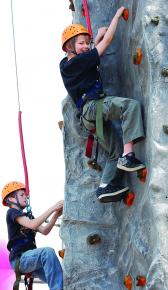
- Tagging – it is advisable non to tag images of students. It is safer to use captions or write short a description of an prototype – for example, "Rock climbing at schoolhouse army camp".
Decide who tin add content
Information technology may be easier to manage the folio/tool if but one or two staff members are adding content. Consider assigning a communications managing director and growing capability across the schoolhouse, staff, and students every bit part of a focus on digital citizenship.
Ensure that anybody adding content is aware of the technical and social considerations. These might include:
- who owns the content
- who is featured in the content
- for whom the content is intended
- parental permission to share images, piece of work, or other activities
- capability to upload and share in ways that back up appropriate purpose and audience.
Agree on the kind of content to share
Devote a staff meeting to look at how other schools have used social media and share different ideas of what kind of content has been shared. Consider how you can keep the focus on learning.
Will there exist images of students included in the content? If and so, have parents given their consent? Many schools have policies well-nigh how images are used on the schoolhouse website and in other publications, only make sure you lot also address how a student's image might be used in social media.
Branding
Include a high quality prototype of your school or school logo.
Legal and upstanding
You need to be aware of the age requirement policy for the platform you choose. Thirteen years is ofttimes considered to be the advisable historic period for individuals to use most forms of social media, although it is more of a guide for individuals outside of the United states.
Many platforms are owned by US based organisations. While their legislation relating to how services are accessed by children does not apply in New Zealand law, the terms of service practise. Schools must be enlightened of their responsibilities in relation to NAG 5 (Educational activity Human activity 1989) and the Privacy Act (1993).
Seek permission from parents
Based on your own context, you lot may wish to seek explicit permission from parents/whānau so that they are informed and empathise what sites the students are using. This is a primal for managing whatsoever risk that might ascend as a result of the utilise of those sites.
Lath of Trustees responsibilities
Boards of Trustees take statutory responsibilities that apply to the use of social media both in and out of schoolhouse in relation to NAG v and the Privacy Act .
Ensure your Lath understands which policies and procedures demand to be added or updated to include the use of social media. The Board will include some parents from the community who can also advocate for appropriate use, especially in situations where teachers may non always exist present.
Policies and digital citizenship agreements
You may wish to create a social media/networking policy for your school. Ideally, this will be part of your existing policies regarding appropriate behaviours in school.
Consider:
- adding specific policy statements related to social media and social network use into other policies, rather than having a separate policy just for this blazon of technology
- reviewing existing agreements considering social media may offering new functions or characteristics not still included.
Write your policy in plain linguistic communication so everyone understands it
A social media policy, responsible use agreement, or digital citizenship agreement should exist written in plain language, allowing all members of the school to access and understand information technology. This document will reflect your schoolhouse values and exist linked with specific behaviours related to social media.
Work with your students, parents, and the Lath of Trustees to construct your agreements. The Netsafe Kit for schools details steps required to produce a cybersafe learning environment with digital citizenship at its cadre.
Digital citizenship at Apiti School
Students, teachers, and the BoT describe their didactics and process for collaborating to create, sympathise, and implement their digital citizenship policy and educatee agreement.
Image, video, and music use

How exercise staff and students use, select, or dispense images, video, and music when they are being used as part of a presentation that may be posted on social media?
It is of import to help students and your community understand that content on the Internet is often owned by others and does not automatically come with the rights to reuse, re-create or share.
- Employ images that take been deliberately tagged for reuse and model this behaviour to all members of the school community.
- Check the copyright on music and songs; select copyright-costless or create your own.
- Be articulate on what off-white use means with regard to video.
More than information »
- Gratuitous to mix: An educator's guide to reusing digital content – supports understanding usage rights and finding reusable content for creative activities.
- Artistic commons in schools – offers useful guidance on the use of online content, and on assigning open licences to content created by your school.
- What is off-white use? – information from YouTube with examples.
Review policies regularly
Review your code of conduct/responsible utilize understanding regularly to make certain that documentation, processes, and procedures are advisable to help yous manage the challenge and opportunity of using digital technologies.
Apiti School – Process for developing a digital citizenship agreement
Apiti Schoolhouse main, Mary Cumming explains their procedure step-by-stride for reviewing and updating their digital citizenship understanding. The is a collaborative process involving teachers, students, and the Board of Trustees.
Appropriate utilise
Prevention is better than response
"Involving students, parents, and whānau in meaningful discussions about the role of digital technology at school and across can help to prevent incidents occurring and reduce their impact when they do."
Digital applied science: Safety and responsible use in school, Netsafe (p. xiv)
The overall objective is to create a learning environs, which involves the safe and responsible use of social media tools.
Take a proactive approach
- Conspicuously explain advisable and expected behaviours.
- Display clear guidelines for employ.
- Revisit expectations regularly inside the context of learning.
- Respond to incidents when they occur.
This approach should reduce negative outcomes by:
- reducing the incidents of misconduct involving digital applied science
- minimising impairment to students.
Your prevention and response plan needs to have a proactive approach to managing the online environments the school is responsible for.
Principles of the Harmful Digital Communications Deed 2015
A digital communication should not:
- disembalm sensitive personal facts about an individual
- be threatening, intimidating, or menacing
- be grossly offensive to a reasonable person in the position of the affected individual
- be indecent or obscene
- be used to harass an private
- make a false allegation
- contain a affair that is published in alienation of conviction
- incite or encourage anyone to send a message to an individual for the purpose of causing harm to the private
- incite or encourage an individual to commit suicide
- denigrate an private by reason of his or her colour, race, ethnic or national origins, religion, gender, sexual orientation, or disability.
More information »
- Digital applied science: Safe and responsible use in schools, Netsafe
- Primal parts of the Harmful Digital Communications Act
- A school's guide for managing negative social media
Agree expectations
Encourage students to – "Care before y'all share"
Clarify with all members of the school what is considered appropriate to mail service online, whether that is on a blog, Facebook page, Instagram, or other platform. Think virtually your school values and learning focus.
Agree expectations first with staff and then, if appropriate to your context, the students. It's important to link your schoolhouse values and definition of a good digital citizen together.
Model advisable behaviours
Consider your linguistic communication, content, and the permissions for images.
- Always ask permission before taking photos or video of others, especially if y'all wish to share the images.
- People have a right to privacy and request permission to publish their image models courteous behaviour.
Always monitor your social media channels
Monitor wherever the school proper name, brand, and content is associated with any course of social media.
It is important to be proactive and monitor what is being said nearly you and then you can:
- promptly respond to questions and comments
- quickly identify situations where there may be bullying or inappropriate comments
- be alerted to when your schoolhouse is mentioned online.
Use tools that make monitoring easy, for example:
- Mention – when you put in key terms such as your school name, you are provided with a daily written report on where your school has come up up.
- Hootsuite – provides a dashboard to monitor all your social media channels at once.
Social media and your customs
Talk over setting up your school social media platform(south) with your customs
- Develop a shared agreement of your purpose for using your chosen social media applications.
- Work together to develop and concur protocols for appropriate posting and employ of images. Publish these on your page or profile so you lot take a set of criteria that tin can be referred to if you demand to address inappropriate behaviour.
- Encourage parents, whānau, and the customs to join, "like", or "follow" your school social media platforms.
- Mail service, monitor, and respond to comments regularly to build your audition interaction.
Request that other social media tools/pages associated with the schoolhouse exist carefully considered. For example, if a parent creates a school Facebook folio divide to the "official" school one, encourage the parent to ensure their page is not confused with the official or teacher driven page. Yous will non be able to command this, simply information technology's important for parents to understand that the schoolhouse's reputation and perception from the community can exist greatly affected by having several pages and sites associated with the school.
School story: Dealing with inappropriate comments on Facebook

"Our school set a Facebook page to help with broadcasting and sharing of school events. We decided to use Facebook because the social media survey we did with our parents and community confirmed this was the well-nigh pop social media platform. Not only did nosotros notice that the Facebook folio was a quick way to connect with parents and the rest of the community, it was also effective in directing people back to the schoolhouse website. And so, we had more people engaged with what was happening at school and greater participation as far as volunteers and support for school activities.
The downside was that we had a parent who left a negative annotate about one of the events on the Facebook "wall" when she should have spoken to one of the teachers direct. The annotate became a spark that ignited a huge discussion between 3 parents on Facebook where their opinions near a variety of things related to the school were shared with anyone who might be visiting the folio.
Our Facebook administrator rapidly removed these comments and contacted the parents directly. We asked that any other issues or concerns be addressed past physically coming into the school and discussing contiguous. If that was not possible, then an e-mail sent to the advisable instructor would be okay followed by a meeting to follow up if necessary. We definitely wanted to make certain that our parents understood that it was distracting, unproductive, and hurtful to circulate a concern, rather than enhance the event in person or with a straight message."
Examples of schools using social media
Facebook and Hobsonville Point Secondary School
- The schoolhouse posts about activities in their own school and in the wider community.
- Posts showing their successes and experiences focus on specific initiatives and benefits to groups of students.
- Issues related to the school itself that have arisen in the media were besides addressed with reassurance, balance, and respect.
Twitter and Auckland Grammar
Schoolhouse events, photos, links to the school livestream assemblies, and specific data on the school website are promoted through Twitter.
Twitter and Ormiston Inferior College
Learning taking place effectually the school is shared with the community through:
- images
- video
- hashtags of themes and concepts explored – for example #sportsday.
The Twitter feed is embedded straight on their school website, which is an effective way to proceed your school website current when some of the content may be static.
Responding to incidents
It can be confusing and distressing when incidents occur through the inappropriate use of digital technologies. The Instruction Act 1989 contains provisions that are directly relevant to how schools should manage an incident involving digital technology.
More than data »
- Digital technology: Safe and responsible use in schools – see Section 4: Responding to digital incidents
- Contact Netsafe – for advice and support related to managing and responding to incidents related to the use of digital technologies in your school customs
- A school's guide for managing negative social media – steps you tin can use to manage negative comments, some things to go along in mind, and resources for further reading
Successful ongoing management of your social media tools
Follow your fix expectations
- Determine who posts and how.
- Model advisable language and behaviour at all times.
Monitor your accounts, post regularly, and reply promptly
If something inappropriate appears remove it immediately
- Regularly monitor your Facebook, Twitter, and other accounts.
- Set up alerts to inform you when a postal service is added so you lot tin respond promptly.
- Use social media to highlight contiguous instructor, parent, and educatee interactions. For example, you might post photos from a sporting event with a link to more content on your schoolhouse website.
If something inappropriate appears, accept the necessary and immediate steps to remove it. If possible, contact the person who made the initial post directly to clarify why the post was taken down and encourage further dialogue to take identify over the phone or in a contiguous coming together.
Consider using a social media management tool
Online tools are bachelor to aid with aggregating, scheduling, posting and responding across the various social media platforms and accounts you might be using. These tools will save time and increment the effectiveness of your social media. Examples include:
- Hootsuite
- Buffer
- Zoho Social
Review your agreements regularly
- Go along to communicate with the Board to check their understanding about how social media is being received.
- Program to review your digital citizenship agreement with students, parents, and whānau regularly. Make information technology visible across all levels of the school community.
- Regularly promote the link to your documentation through the school newsletter and your social media channels, and share digital citizenship tips frequently.
Key resources
A school's guide for managing negative social media

The guide was developed by Canterbury principals groups to support you and your staff to deal with negative social media. This guide outlines steps yous can use to manage negative comments, some things to proceed in mind, and resources for your farther reading.
Primal resource
Social media pack
A collection of shareable online safety content and images for you to utilise on your school's social media folio from Netsafe.

Digital technology: Safe and responsible apply in schools
A guide to support NZ schools with managing safe and responsible use of digital technology for learning. It includes help on managing risk and incident response. Developed by Netsafe and the Ministry of Teaching, Feb 2015.

A school'southward guide for managing negative social media
Adult by Canterbury principals groups, this guide supports schools dealing with negative social media. This guide outlines steps you tin can use to manage negative comments, some things to keep in heed, and resources for further reading.

Managing a Facebook Group
Communication compiled past Netsafe on running an online community group page.
Engaging with your customs through social media

Getting started with social media for your school
Tips on how to use social media for a primary or secondary school. This slideshare presentation gives ideas on how to use social media to engage with parents, students, and the community at large. Published 2015.

How might we use Facebook/social media to connect to our schoolhouse community?
A discussion in the VLN between NZ teachers focusing on using Facebook on its purpose to extend the human relationship between school and community.
Pedagogy, learning, and digital citizenship
Digital citizenship and cyber-rubber in schools
Practical aid, starters, and resource on Enabling due east-Learning.

Search.creativecommons.org
A search tool that retrieves copyright-gratuitous or costless-to-use content that has been deliberately tagged for re-utilize.

Digital citizenship: Young people's rights on social media
Brusk, six-lesson units of piece of work written past teacher and citizenship specialist Emily Cotterill, and jargon-free terms and weather for five of the major social media sites. The lessons take been devised co-ordinate to simplified versions of social media terms and conditions relevant to the Uk. While there may be some variation in other countries, the general principles are transferable. The downloadable PDFs are costless just a login is required to access them.
- Digital citizenship: Young people's rights on social media 7-11 year olds
- Digital citizenship: Young people's rights on social media 11-14 year olds
- Digital citizenship: Young people's rights on social media 14-16 yr olds

Social networking
How to employ social networking sites and social media sites creatively and safely. Tips for evaluating these online resources, advice and ideas for promoting safe social networking, and examples of how social networks tin and are being used in schools, at home, and on mobiles to support informal and formal learning. Includes ideas and activities for students.
- Social networking detective – Practical activities for early secondary schools to employ for instruction skills and noesis around social media sites; how to manage privacy, getting help, and more.

Social media
ReachOut is an Australian online mental health organisation. The social media bundle containing classroom resources and lesson plans is costless but users demand to register to access it.
Blogging
Information, school stories, and resource to back up teachers with setting up and using blogs with students.

Getting started with countersign managers
Countersign managers store and enter passwords for y'all, combining security with convenience. This page provides data on choosing, setting upwardly, and using a password managing director.

X Trends 2013: The social web
Karen Melhuish Spencer talks near social learning and the social spider web in this EDtalk. She challenges schools to support students to human activity with integrity online, offer a curriculum that provokes deep questioning, allow students to bulldoze the learning, and harness engineering to show learning in multiple ways.
Managing and monitoring the apply of technologies online
Netsafe schools
The Netsafe Kit for schools was relaunched in 2018. The kit contains frameworks, programmes, and a suite of online tools for schools and kura.

How to create social media guidelines for your school
A step-by-pace guide for schools to who want to collaborate with their customs to develop guidelines for using social media. Resources adult by Edutopia in conjunction with Facebook.
Help! My email account has been hacked
Learn the simple steps to reduce the chance of your accounts existence hacked from Netsafe.

Contact Netsafefor online safety help and advice
Netsafe provides advice and support related to managing and responding to incidents related to the apply of digital technologies in your school community
stephensseaut1949.blogspot.com
Source: https://elearning.tki.org.nz/Beyond-the-classroom/Engaging-with-the-community/Social-media
0 Response to "A picture from the school website is automatically uploaded on the classroom Facebook page."
Postar um comentário